How Can Parents Share Responsibilities While Raising a Child?
Explore how shared parenting supports families
How Can Parents Share Responsibilities While Raising a Child?
Raising a child is a shared responsibility. When both parents are actively involved in their child's everyday care, emotional well-being, learning and important decisions, it can create a more supportive environment for the entire family.
Shared parenting does not mean dividing every responsibility exactly 50/50. Every family's circumstances are different. What matters is creating a partnership where both parents contribute meaningfully, communicate openly and remain involved in their child's life.
Key Takeaways
- Shared parenting does not mean dividing every responsibility equally.
- Both practical care and emotional support are important parenting responsibilities.
- Children benefit from consistent, responsive relationships with the adults caring for them.
- Open communication can help parents manage responsibilities without one person carrying the entire load.
- Parenting responsibilities may change depending on work schedules and family circumstances.
- Children learn cooperation and respect by observing how adults work together.
How should couples divide parenting responsibilities?
Parenting responsibilities go far beyond feeding a child, getting them dressed or taking them to preschool. Both parents can contribute to different aspects of their child's life, including:
Everyday care
This may include:
- Preparing meals
- Bath and bedtime routines
- Getting children ready for preschool or daycare
- Dressing and personal care
- Managing appointments
- Organising children's belongings and schedules
Sharing everyday routines also gives both parents regular opportunities to connect with their child.
Emotional support
Children need adults who listen, comfort them, and take an interest in what is happening in their lives.
Both parents can contribute by:
- Talking about feelings
- Comforting their child after a difficult day
- Listening to their stories
- Reading together at bedtime
- Celebrating achievements and milestones
- Being available when their child needs reassurance
Emotional availability is just as important as completing practical parenting tasks.
Learning and play
Children learn through everyday interactions with the adults around them.
Both parents can spend time:
- Reading books
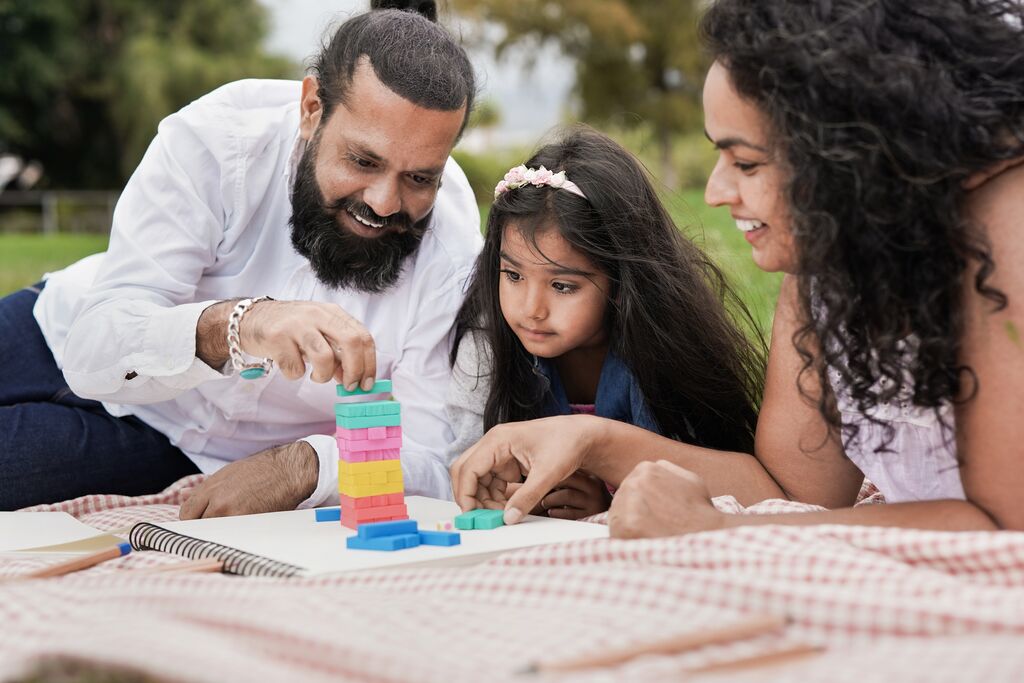
- Building with blocks
- Exploring outdoors
- Playing games
- Cooking together
- Visiting parks, museums or libraries
- Talking about their child's day
These experiences provide opportunities for connection while supporting children's learning and development.
Household and planning responsibilities
There is also a less visible side of parenting: remembering what needs to be done. Shopping, laundry, appointments, preschool communication, family schedules, packing bags and planning meals are all part of raising a child.
Sharing some of this planning can help prevent one parent from carrying most of the family's day-to-day responsibilities.
Why is it important for both parents to be involved?
Children benefit from consistent, caring relationships with the important adults in their lives. When both parents take an active interest in their child's routines, feelings, friendships, learning and experiences, children have more opportunities to build secure and meaningful relationships.
UNICEF recognises responsive caregiving and nurturing relationships as important components of healthy early childhood development.
Shared parenting can also help children:
- Feel safe and supported
- Build strong relationships with both parents
- Develop confidence and independence
- Experience different ways of playing, communicating and learning
- Observe cooperation and respect between adults
Being involved doesn't necessarily mean spending the same number of hours with a child. Consistent and meaningful involvement matters too.
Do parenting responsibilities need to be divided equally?
No. Shared parenting is not about keeping score.
One parent may handle the morning routine while another takes responsibility for bedtime. One may attend more preschool events while the other manages medical appointments or weekend activities. Responsibilities may also change from week to week.
The goal is not mathematical equality. It is for both parents to remain meaningfully involved and for the division of responsibilities to feel manageable and fair within their particular family.
What if one parent works longer hours?
Different working hours do not prevent both parents from being actively involved in raising their child.
A parent who reaches home later might:
- Read the bedtime story
- Have breakfast with their child
- Manage part of the morning routine
- Plan weekend activities
- Attend preschool events when possible
- Take responsibility for particular appointments or tasks
What matters is consistency.
A child doesn't need both parents available every hour of every day to develop meaningful relationships with them.
How can I get my partner more involved with our child?
Start with communication rather than assumptions. Instead of waiting until one person feels overwhelmed, parents can regularly talk about:
- Upcoming appointments and activities
- Preschool or daycare requirements
- Morning and bedtime routines
- Household responsibilities
- Work commitments
- Challenges either parent is experiencing
- Areas where one person needs more support
It can also help to ask a simple question:
“What needs to happen this week, and how are we going to manage it together?”
Parenting young children is unpredictable. Illness, work deadlines, travel and unexpected situations mean responsibilities sometimes need to shift.
A flexible arrangement is often more realistic than trying to follow a perfectly equal schedule.
How can parents share the mental load of raising a child?
Parenting includes many responsibilities that are easy to overlook because they are not physical tasks.
Remembering that the preschool needs a costume on Friday, booking the paediatrician, replacing clothes a child has outgrown, remembering vaccination dates, planning meals or noticing that the wipes are almost finished are all examples of the mental load involved in parenting.
Instead of one parent automatically becoming the person who remembers and delegates everything, both parents can own different areas.
For example, one parent might completely manage medical appointments while another manages preschool communication and requirements.
The important distinction is between helping with a task and taking responsibility for it.
What are the benefits of sharing parenting duties?
Shared parenting can benefit the whole family.
When responsibilities are managed collaboratively, parents may experience:
- Less individual pressure
- More opportunities for rest
- Better communication
- Greater confidence in parenting
- A more manageable work-family balance
- Stronger family relationships
It can also give both parents opportunities to experience the everyday parts of childhood—not only the major milestones, but bedtime conversations, funny questions, difficult mornings and small achievements.
What if my partner and I have different parenting styles?
Parents do not have to respond identically to every situation.
Different personalities and approaches are normal. Problems are more likely to arise when children receive completely conflicting messages about important expectations or boundaries.
Parents can discuss areas where consistency matters most, such as:
- Safety
- Behavioural boundaries
- Screen time
- Sleep
- Mealtime expectations
- How consequences are handled
You can still have different ways of playing, communicating and connecting with your child while agreeing on the important principles you want to follow as a family.
What role do grandparents play in raising a child?
Yes. Many families rely on grandparents, relatives, nannies or other trusted caregivers.
These adults can become important sources of care, connection and emotional security for children.
The key is communication. When the adults caring for a child understand important routines, expectations and boundaries, it becomes easier to provide consistent support.
How can preschool and daycare support parents in raising a child?
Children benefit when the important adults in their lives communicate and work together.
Strong partnerships between families and early childhood educators allow parents and teachers to share observations, discuss developmental progress, celebrate milestones and understand how a child is doing across different environments.
The NAEYC’s Principles of Family Engagement highlight family engagement and respectful partnerships with families as important elements of high-quality early childhood education.
At Kido, we believe parents are a child's first teachers. Our educators work closely with families by sharing observations, celebrating milestones and supporting each child's learning journey—because children benefit when home and their preschool or daycare work together.
Conclusion
There is no perfect formula for sharing parenting responsibilities.
Some days one parent may do more; on other days, the balance may shift. What matters is creating a partnership where both parents remain involved, communicate openly and take responsibility for their child's well-being.
For children, it is not about whether every task was divided equally. It is about growing up knowing the adults caring for you are interested, involved, and working together to support you.
If you're looking for a preschool and daycare that values strong partnerships with families, Book a visit to Kido and experience how we work together with parents to support every child's learning and development.
FAQs
No. Shared parenting means both parents contribute meaningfully to raising their child. Responsibilities do not need to be divided exactly in half.
The parent who travels can still maintain a consistent connection through calls, conversations, routines when they are home and taking ownership of particular responsibilities when possible.
Parents can share meals, morning routines, preschool or daycare drop-offs, appointments, playtime, bedtime, household tasks and planning related to their child.
Start by discussing specific responsibilities rather than saying you need “more help.” Talk about what needs to be managed and agree on areas each parent can take ownership of rather than relying on one parent to continually delegate tasks.
Review your schedules together and divide responsibilities based on availability, rather than trying to make every task equal. Morning routines, pickups, meals, bedtime, appointments, and weekend responsibilities can all be allocated based on what works realistically for your family.
Regularly show interest in your child's experiences, listen when they speak, participate in routines and be emotionally available during both difficult and happy moments.
Differences are normal. Discuss the areas where consistency matters most, agree on key boundaries, and keep your child's needs at the centre of the conversation rather than focusing on whose approach is “right.”