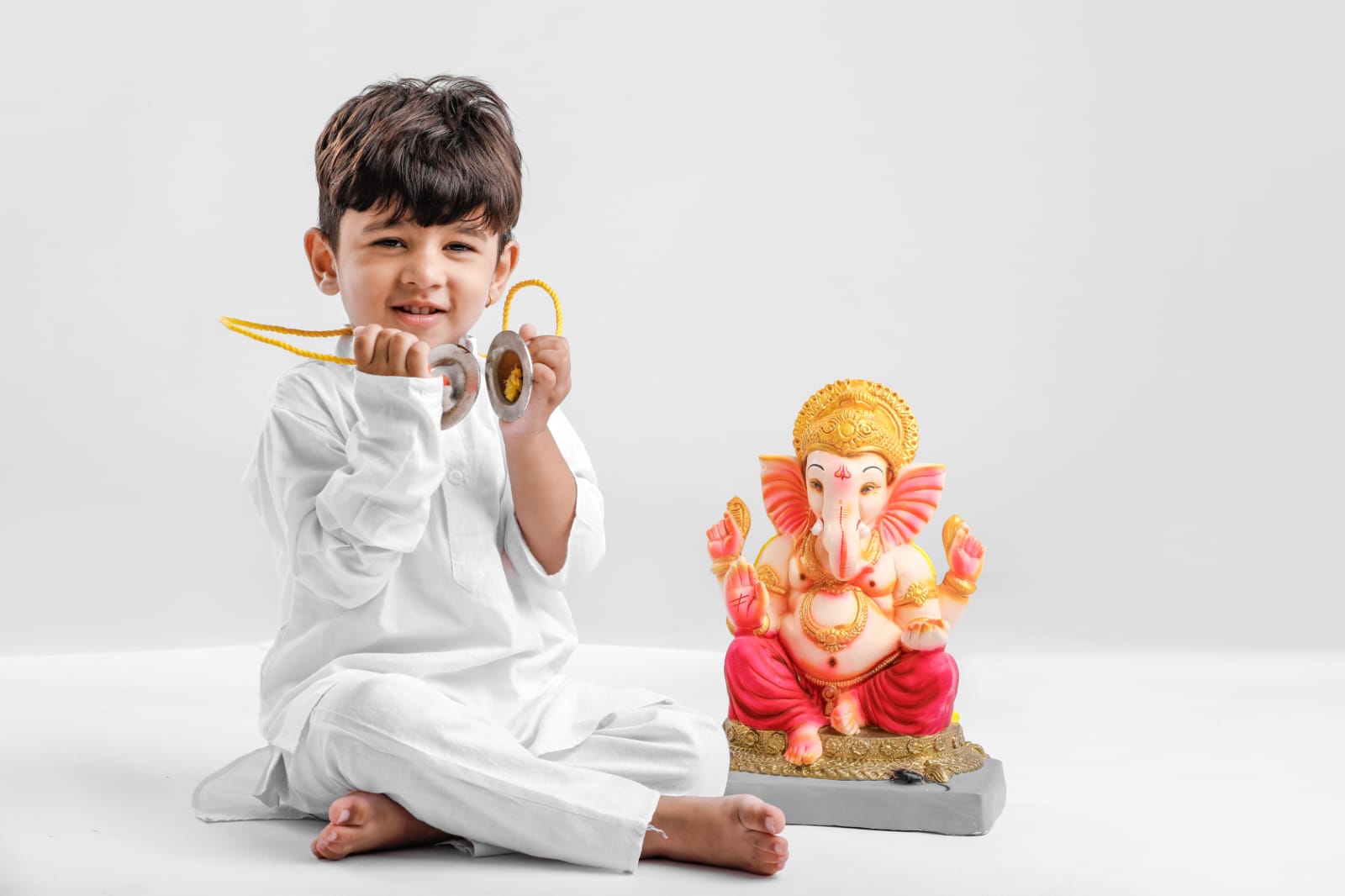
Fun Ganesh Chaturthi Activities for Kids
Making festivals meaningful and memorable for young children
Have you ever wondered what your child will remember most about a festival—the decorations they saw, or the moments they were actually part of?
Ganesh Chaturthi offers many simple opportunities for young children to get involved—whether it is arranging flowers, helping in the kitchen, creating something of their own or simply enjoying music and time with family.
These everyday moments can be more than just festive fun. They give children opportunities to explore, communicate, create, make choices and build independence, while also helping them feel included in family celebrations.
You don't need elaborate crafts or perfectly planned activities. For young children, some of the most meaningful experiences come from simply being included in the preparations and celebrations.
Key Takeaways
- Choose simple Ganesh Chaturthi activities suited to your child's age.
- Let children explore and create instead of focusing on a perfect finished product.
- Involve children in everyday festival preparations such as decorating, cooking and organising.
- Use conversations around the festival to encourage language and curiosity.
- Always supervise young children when using small objects, scissors, food or craft materials.
What are some easy Ganesh Chaturthi activities for kids?
The best festival activities for young children are simple, hands-on and give them an opportunity to participate alongside the family.
Here are eight easy ideas you can try at home.
1. Make decorations with flowers and leaves
Flowers and leaves are often part of Ganesh Chaturthi celebrations, making them an easy material for children to explore.
Give your child a sheet of paper or cardboard and let them arrange flowers and leaves however they like.
Toddlers can touch, sort and place the materials, while older children might enjoy creating patterns or helping to make a simple garland.
There doesn't need to be a particular final design. The aim is to let children make choices, experiment and express their own ideas.
The National Association for the Education of Young Children (NAEYC) highlights the value of process-focused art, where children's exploration and creative process are valued rather than expecting everyone to produce the same finished result.
2. Create Ganesh Chaturthi artwork
Set out paper, crayons, washable paint or other age-appropriate craft materials and encourage your child to create something inspired by what they see around them during the celebrations.
They might draw flowers, make colourful patterns or create their own interpretation of the decorations at home.
For toddlers, use large crayons and bigger sheets of paper that are easier to manage. Older preschoolers can experiment with a wider variety of materials, with appropriate adult supervision.
Instead of showing children exactly what their artwork should look like, ask:
“What would you like to create?”
Their answer might surprise you.
3. Make festival-inspired playdough creations
Playdough is a simple way to bring sensory play into the celebrations.
Children can roll, pinch, flatten and shape the dough to make flowers, sweets, decorations or something entirely from their imagination.
Join your child and make something alongside them. You can use this time to talk about the festival, family traditions or the things they have noticed during the celebrations.
Activities involving dough and clay also give young children opportunities to use their hands, explore shapes and express their creativity.
How can I involve my child in Ganesh Chaturthi preparations?
Children don't have to sit separately doing a “kids' activity” while adults prepare for the festival. Many everyday preparations can become meaningful learning experiences.
The key is to give them small, safe and manageable responsibilities.
4. Let them help in the kitchen
Depending on their age, children can:
- Wash fruit or vegetables.
- Mix ingredients with a spoon.
- Pour pre-measured ingredients into a bowl.
- Count pieces of fruit.
- Arrange food on a plate.
- Help wipe the table afterwards.
For toddlers, keep tasks very simple and closely supervised. Older preschoolers can gradually take on a little more responsibility.
The aim isn't to make the perfect festival dish. It's to help children experience the excitement of contributing to family preparations.
5. Make a colourful rangoli-inspired pattern
Creating patterns is another easy way to involve children. Start a simple pattern using child-safe materials and ask your child:
“What do you think comes next?”
You can play with colours, shapes, sizes and sequences.
Toddlers might simply enjoy sorting or identifying colours, while older preschoolers can try creating and extending their own patterns.
It is a simple way to introduce early mathematical thinking without turning the experience into a formal lesson.
6. Turn festival clean-up into a game
Preparing the home for guests provides plenty of opportunities for children to help.
They could:
- Put cushions in place.
- Carry lightweight napkins.
- Sort decorations.
- Put toys into baskets.
- Help arrange flowers.
- Wipe a low surface with a clean cloth.
Young children often enjoy being given a real role rather than being asked to stay out of the way.
Even small responsibilities can help children experience what it means to contribute to family life.
How can I make Ganesh Chaturthi fun for my toddler?
For toddlers, keep things short, sensory and playful. They don't need to understand every tradition or complete complicated activities to be included.
7. Have a family music and movement session
Play music your family enjoys and give your child space to move.
You could clap slowly and quickly, tap simple rhythms, march, sway or invent movements for each other to copy.
Younger children may enjoy simply copying you. Older children can create their own movements and ask the family to follow them.
Music and movement give children opportunities to listen, respond, coordinate their bodies and express themselves—while simply having fun together.
8. Let your child prepare something for guests
If you're welcoming family or friends, involve your child in preparing something for them.
They could decorate a simple gift bag, help place fruit or sweets inside, create a small piece of artwork or help arrange something for guests to take home.
When guests arrive, encourage your child to hand it to them if they feel comfortable doing so.
Small interactions like these can help children participate in the social side of celebrations and gradually build confidence around other people.
How can I make festivals meaningful for my child?
You don't need to give a young child a long explanation about the significance of every tradition.
Start with what they can see, hear, touch and experience.
Talk about what your family is doing. Name the colours and decorations around you. Tell them about a family tradition. Let them help prepare something. Encourage them to greet relatives and participate in simple moments together.
Young children learn a great deal by observing and listening to the people around them.
Rather than showing them exactly what to create or expecting a particular outcome, give them opportunities to experiment, make choices and contribute in their own way.
At Kido, we believe children learn through doing, exploring and making choices. Everyday experiences, including family and cultural celebrations, can give children meaningful opportunities to communicate, create, problem-solve and connect with the world around them.
Celebrating Through Everyday Moments
For young children, the most meaningful part of Ganesh Chaturthi may not be the finished decoration or activity. It may simply be the opportunity to help, explore, talk, create and feel included.
Choose one or two activities that suit your child's age and interests. Give them time to explore without worrying about creating something perfect, and enjoy the experience together.
Discover more about Kido and how we create opportunities for young children to learn through play, exploration and meaningful everyday experiences.
FAQs
A two-year-old can enjoy simple activities such as colouring with large crayons, exploring flowers and leaves, playing with dough, helping wash fruit or moving to music. Keep activities short, use safe materials and supervise closely.
Try open-ended activities such as flower and leaf collages, painting, playdough creations or colourful patterns. Give children choices rather than expecting them to copy a perfect example.
Give them small jobs such as arranging flowers, sorting safe decorations, placing napkins on the table, washing fruit or helping tidy their toys. The task doesn't need to be complicated for your child to feel involved.
Not necessarily. Families can choose which traditions they want to introduce to their children. Festival activities can also focus on family, art, music, food, creativity, colours, patterns and spending time together.
Festival preparations can naturally introduce children to language, counting, patterns, colours, movement, creativity and social interaction. The learning happens through participating in real experiences rather than through formal lessons.
No. Young children learn by experimenting. Rather than correcting their work to make it look a particular way, encourage them to talk about what they have made and explore their own ideas.
Keep a few familiar activities available, such as drawing, books, blocks or puzzles. You can also involve your child in safe parts of the gathering, such as welcoming guests, arranging flowers or helping set the table.