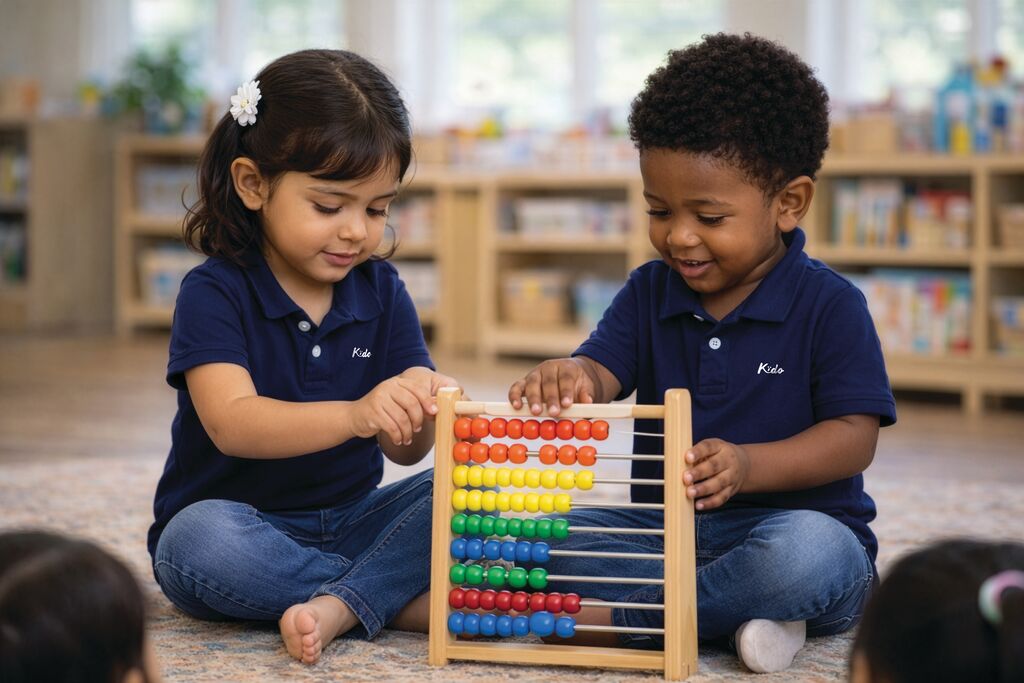
Do Boys and Girls Need Different Toys?
Helping children explore freely through play.
If your son loves playing with dolls, or your daughter spends hours building with blocks and racing toy cars, should you encourage it?
Absolutely.
Boys and girls do not need completely different toys. What matters more is whether a toy is safe, appropriate for your child's developmental stage and gives them opportunities to explore, imagine, communicate, move and solve problems.
Children's interests will naturally differ. One child may love vehicles. Another may spend an afternoon caring for a doll. Some will choose puzzles, building blocks, art, music or pretend play.
Rather than deciding which toys children should enjoy based on whether they are a boy or a girl, give them opportunities to discover what genuinely interests them.
Key Takeaways
- Boys and girls do not need separate toys to support their development.
- Different types of play help children develop different skills.
- Dolls, blocks, vehicles, art materials, puzzles and pretend-play resources can benefit any child.
- Gender labels can unnecessarily restrict the play experiences children feel comfortable exploring.
- Open-ended toys encourage children to use their imagination and develop their own ideas.
- Follow your child's interests while continuing to introduce them to different kinds of play.
- When choosing toys, consider safety, age appropriateness and opportunities for learning rather than whether the packaging says “for boys” or “for girls”.
Do boys and girls really need different toys?
No. Boys and girls can develop important cognitive, physical, language, social and emotional skills through many of the same play experiences.
A set of building blocks doesn't teach different skills just because a boy or girl uses it.
Blocks can encourage spatial awareness, problem-solving, creativity and perseverance. A doll can encourage nurturing behaviour, storytelling, communication and imaginative play.
Art materials can support creativity, fine-motor development and self-expression. Balls and outdoor equipment can encourage coordination, movement and teamwork. Puzzles can develop concentration, logical thinking and problem-solving.
The value of the toy comes from what children can do with it, not which gender it is marketed towards.
The American Academy of Paediatrics advises parents to offer children a broad selection of toys—including dolls, vehicles, action figures and blocks—and to be conscious of toys that reinforce gender stereotypes.
Why are some toys labelled for boys and others for girls?
Walk through a toy shop, and you may still notice some very familiar patterns. Dolls and kitchen sets may be marketed primarily towards girls. Vehicles, robots, construction sets or science toys may be marketed more heavily towards boys.
Sometimes the distinction comes largely from packaging, colours, and advertising rather than anything about the toy itself.
UNICEF notes that toy marketing can reinforce traditional gender stereotypes and recommends allowing both boys and girls to experience toys and activities traditionally associated with either gender.
For parents, this means looking beyond the packaging.
Instead of asking: “Is this toy meant for a boy or a girl?”
Ask: “What can my child do, imagine or learn with this?”
That is a much more useful way to choose.
Is it okay for boys to play with dolls?
Yes. Playing with dolls gives children opportunities to imitate everyday experiences and explore relationships through pretend play. A child might feed a doll, put it to sleep, take it to the doctor or comfort it when it is “upset”.
These simple scenarios can encourage:
- Communication
- Storytelling
- Imagination
- Nurturing behaviour
- Social understanding
- Emotional expression
A boy does not lose anything by playing with a doll.
He simply gains another type of play experience. UNICEF specifically recommends that both boys and girls have opportunities to play with dolls and cooking toys as well as participate in physically active play.
Should girls be encouraged to play with blocks, cars and construction toys?
Yes. Construction toys can encourage children to plan, experiment, solve problems and understand how objects fit together. Vehicles can become part of elaborate imaginative games.
A simple collection of blocks might become a bridge, house, road, rocket or an entire city depending on what a child imagines. These experiences can support spatial thinking, creativity, coordination and problem-solving.
There is no developmental reason these opportunities should belong only to boys.
If your daughter is interested, encourage her.
Even if she hasn't shown interest yet, there is nothing wrong with making these kinds of toys available and letting her decide.
Should I buy gender-neutral toys for my child?
You don't need to replace every toy in your home with something labelled “gender-neutral”. The aim is not to create another category of toys children are supposed to play with.
It is to give them choice.
A healthy mix might include:
- Blocks and construction materials
- Dolls and figures
- Vehicles
- Puzzles
- Art and craft materials
- Books
- Musical instruments
- Balls and outdoor equipment
- Pretend-play resources
- Playdough
- Natural and loose materials
Your child does not have to enjoy everything.
They may develop very strong preferences—and that is perfectly fine.
The important distinction is between a child choosing something because they enjoy it and a child believing they cannot choose something because it is “not for boys” or “not for girls”.
What are open-ended toys, and why are they good for children?
Open-ended toys can be used in many different ways rather than having one fixed purpose or outcome.
Think of:
- Wooden blocks
- Cardboard boxes
- Fabric pieces
- Playdough
- Art materials
- Loose parts
- Natural materials
- Simple figures
Give five children the same cardboard box, and you may end up with five completely different games. It could become a car, house, shop, rocket or hiding place.
That is the beauty of open-ended play.
Instead of telling children exactly what to do, these materials invite them to decide.
Research cited by NAEYC suggests that open-ended materials give children more freedom for creativity, imagination, and self-expression than strongly gendered play materials.
Can gender stereotypes affect how children play?
They can. Young children are constantly learning from the world around them—not only from what adults deliberately teach them.
They notice advertisements.
They hear comments.
They observe what adults do.
And they can begin forming ideas about what boys and girls are “supposed” to like or do.
UNICEF's research on gender equality in the early years notes that children can begin developing an understanding of gender at around two or three years old, and stereotypes can influence which toys and activities children believe are appropriate for them.
That does not mean parents need to analyse every toy or correct every preference.
It simply means being conscious of the messages children receive.
Comments such as:
“That's a girl's toy.”
“Boys don't play with dolls.”
“Cars are for boys.”
can unintentionally tell children that some experiences are not available to them.
Instead, keep the opportunity open.
“Would you like to try it?”
Sometimes that is all a child needs.
What if my child only likes stereotypically ‘boy’ or ‘girl’ toys?
That's okay too. The goal isn't to push children away from what they genuinely enjoy.
If your daughter loves dolls, she can play with dolls. If your son loves cars, he can play with cars.
Their preferences don't become a problem just because they match traditional stereotypes. The important thing is to avoid making those preferences their only options.
Keep other experiences available.
Your car-loving child might also enjoy painting.
Your doll-loving child might discover construction.
A child obsessed with dinosaurs may unexpectedly enjoy helping with pretend kitchen play.
Children's interests evolve when they have opportunities to explore.
Follow their interests without limiting their possibilities.
How can I encourage different types of play at home?
You don't need an enormous toy collection. In fact, ordinary materials can often create excellent play opportunities.
Try making different kinds of play easily accessible.
You might keep:
- Blocks near toy animals so children can build habitats.
- Dolls near cardboard boxes that can become beds, houses or cars.
- Art materials where children can create independently.
- Scarves and fabric pieces for dressing up and pretend play.
- Books that show men and women in varied roles.
- Simple household objects for supervised pretend play.
You can also join your child's play occasionally.
- Ask questions.
- Wonder aloud.
- Let them show you what they are creating.
- But don't feel that you need to direct everything.
Sometimes the most interesting play begins when adults leave enough space for children to decide what happens next.
What should I look for when buying toys for my child?
Start with your child, not the toy aisle.
Ask:
Is it safe for their age?
Check for age suitability, small parts and the quality and condition of materials.
Can my child actually do something with it?
Look for toys that encourage children to build, imagine, move, communicate, create or solve problems.
Can it be used in different ways?
The longer a child can reinvent a toy, the more opportunities it may provide for exploration.
Does my child already have similar play experiences?
Instead of buying another version of something they already own, consider introducing a different kind of play.
Am I choosing it because my child is interested—or because it is marketed towards their gender?
It is a simple question, but a useful one.
The American Academy of Paediatrics recommends simple, traditional toys that encourage imagination and interaction, rather than assuming expensive or highly electronic toys offer greater developmental benefits.
How should preschools approach toys and play?
A good early years environment should give children access to different kinds of play without unnecessarily restricting experiences according to gender.
That means a boy should feel just as comfortable exploring the home corner as a girl. A girl should feel just as welcome at the construction area as a boy.
Educators can support this by making varied materials accessible, observing children's interests and inviting them to explore without telling them which activities they should prefer. The environment matters too.
Books, images, stories and pretend-play materials can show children that people can take on many different roles.
UNICEF has highlighted the important role early childhood education can play in challenging gender stereotypes while children are still forming ideas about themselves and the world around them.
How does Kido encourage children to explore through play?
At Kido, our learning environments give children opportunities to explore different interests, materials, and experiences through purposeful play. A child might move from construction to storytelling, from art to imaginative play, or from an outdoor physical experience to quiet exploration.
Educators observe children's interests and create opportunities for them to explore ideas, collaborate with peers, make choices, and try something new.
We want children to discover what interests them without assuming that certain activities belong to boys and others to girls.
Because childhood should be a time for discovering possibilities—not narrowing them.
Book a Centre Tour to see how play, exploration and discovery come together at Kido.
FAQs
Yes, doll play can encourage imagination, communication, storytelling and nurturing behaviour. These experiences benefit all children.
Absolutely. Blocks and construction materials can support spatial awareness, creativity, coordination, planning and problem-solving.
Not necessarily. You do not need to buy only toys labelled gender-neutral. What matters is giving children access to varied, safe and developmentally appropriate play experiences without unnecessarily restricting their choices by gender.
Toys can offer opportunities to practise different skills, but development doesn't come from a toy alone. How children play, interact, experiment, and communicate—and the support they receive from adults—also matters.
Play is one of many experiences that can help children discover what interests them. Offering varied opportunities lets children explore different ideas and abilities without deciding their interests for them.
Look for safe, age-appropriate toys that encourage movement, language, sensory exploration, imitation and simple problem-solving. Blocks, sturdy books, balls, simple puzzles, dolls, vehicles, and pretend-play materials are all great choices.
Three-year-olds often enjoy imaginative play, construction, art, simple puzzles, books, playdough, music and active outdoor play. Choose toys that can grow with their imagination rather than having only one way to use them.
Let him explore it if he is interested. Playing with a doll can support pretend play, communication, storytelling, and nurturing behaviour.
There is nothing wrong with enjoying princess play. Follow her interest while still offering other experiences—such as construction, outdoor play, puzzles, books, art, and science exploration—without pressure.
You don't necessarily need to reject every traditionally gendered toy. What matters more is ensuring that your child's overall play environment provides variety and choice.
Of course. Pretend cooking can encourage imagination, language, sequencing, social interaction and familiarity with everyday routines.
No. Vehicles can encourage imaginative play, language, spatial thinking and understanding of movement for any child who enjoys them.
There is no ideal number. Children do not need a large collection to play meaningfully. A smaller variety of versatile, age-appropriate toys and open-ended materials can provide plenty of opportunities for exploration.
Prioritise safety, age appropriateness, durability and opportunities for active play. Consider whether the toy encourages your child to imagine, communicate, create, move or solve problems rather than focusing on whether it is marketed towards boys or girls.
Let Children Discover What They Enjoy. Your child does not need to like every toy.
And you don't need to deliberately steer them away from dolls, cars, princesses, dinosaurs, or anything else they genuinely enjoy.
The goal is simpler.
Give them choices.
Let them build.
Let them care for a doll.
Let them race cars.
Let them paint, climb, dress up, create stories, solve puzzles and turn an ordinary cardboard box into something only they can imagine.
Watch what captures their attention.
Introduce new experiences.
And try not to decide what belongs to them based simply on whether they are a boy or a girl.
Play gives children a safe space to discover not only how the world works, but what interests them within it.
At Kido, children can explore different forms of play, follow their curiosity, and build confidence through meaningful early learning experiences.